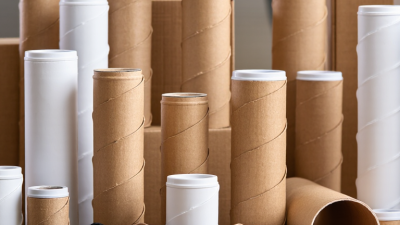
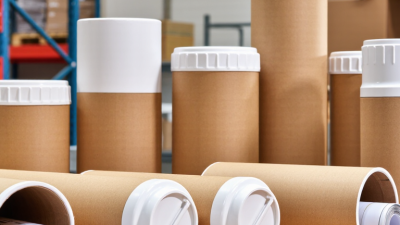
Choosing the right poster mailing tubes supplier in China involves more than comparing prices. Buyers need packaging that protects prints from crushed ends, moisture, and rough handling during transit. A well-made tube should have firm walls, secure end caps, and a diameter suited to the rolled artwork. Small details matter.
This guide explores how to assess suppliers and what to verify before requesting a quotation. Compare material thickness, available lengths, printing options, minimum order quantities, and sample policies. Ask how the supplier checks tube strength and keeps product dimensions consistent between orders. If environmental claims matter, request clear details about materials and recycling options rather than relying on broad marketing language.
A supplier’s website can offer useful clues, but it cannot confirm production quality on its own. Request samples, review written specifications, and check whether communication about lead times and packaging is precise. Photos may look convincing. They are not a substitute for inspection. There is no single “top” supplier for every buyer; order size, customization needs, destination, and budget all change the decision. Even a careful checklist can miss something, so confirm key details before production begins. The sections ahead provide a practical starting point for comparing poster mailing tubes suppliers in China with greater confidence.
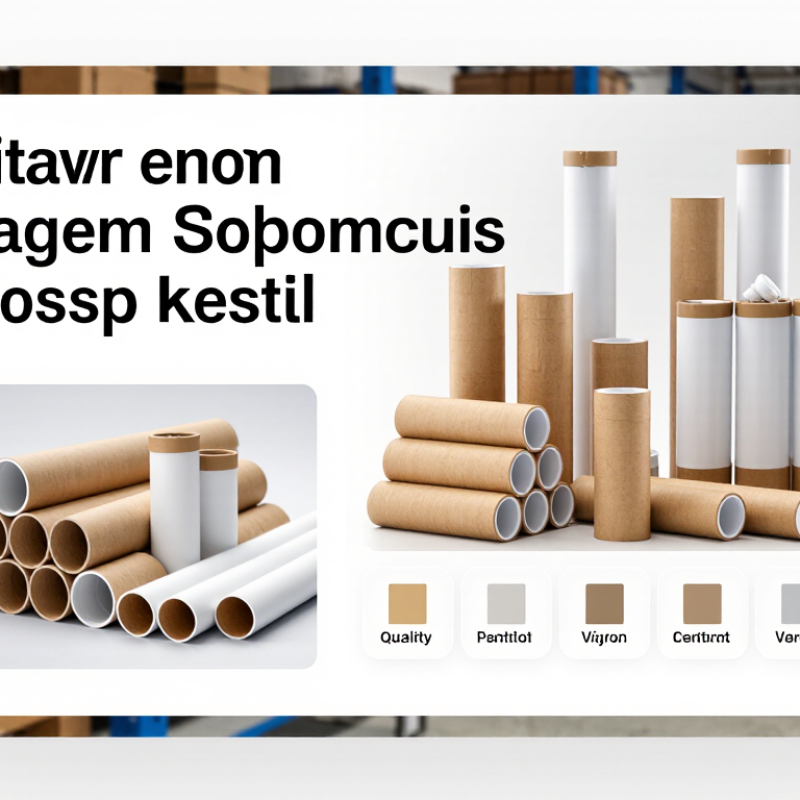
Poster mailing tubes are rigid, hollow containers designed to protect rolled prints during handling and transit. They are commonly made from spiral-wound paperboard, with plastic or paper end caps. A poster slides inside without sharp folds, helping prevent creases, scuffed ink, and bent corners. Simple, but useful. Tubes also hold plans, maps, certificates, and lightweight banners.
Choose a tube slightly longer than the poster, leaving room for protective tissue and secure caps. A diameter that is too small can make a print difficult to remove; too much empty space lets it shift. In a packing room, a snug roll and firmly fitted end caps make a practical difference. For damp conditions, add a moisture-resistant inner sleeve, since paperboard can soften when wet. Check that the tube stays round after stacking. It sounds obvious, yet this detail is easy to overlook. Not every poster needs heavy-wall packaging, either; excessive material adds weight without always improving protection. Match the tube’s strength to the print’s size, weight, and route.
When evaluating poster mailing tube suppliers in China, request measurable specifications, not just “heavy-duty” claims. Check tube length, inner diameter, wall thickness, paper grade, end-cap fit, and moisture resistance. Ask for a sample packed with a full-size poster; loose caps can let the roll slide and crease at the edge. Smithers’ The Future of Global Packaging to 2028 projects the global packaging market will exceed $1.2 trillion by 2028. That scale makes consistent quality control important, but it does not prove any individual supplier’s performance.
Request recent inspection records and ask how the factory controls winding thickness, bonding, and batch variation. For shipping tests, discuss whether a procedure based on ASTM D5276, the standard drop test for loaded containers, fits your parcel’s weight and route. Compare samples from multiple production lots, not only a handpicked prototype. One sample can mislead. Also verify quoted lead times, minimum order quantities, export packing, and how defects are documented and resolved.
Tips: Send the same drawing and packing brief to each supplier. Measure tube wall thickness with calipers, check cap retention by hand, and photograph any crushed ends after a trial shipment. A neat sample is useful, but it is not proof of repeatable production. I would still want to inspect another batch.
China’s poster mailing tube market is led by factories that manage tube forming, sizing, and packing in-house. Buyers should look beyond broad product catalogs. A capable supplier can explain its kraft-paper grades, spiral-winding process, wall thickness, and end-cap fit. Ask for samples in the exact length and diameter you need. Check whether the caps stay secure after repeated handling, and whether the tube resists crushing under stacked cartons. Small differences matter.
Suppliers with flexible production are often better suited to poster orders than general packaging traders. They can accommodate custom lengths, print placement, and mixed quantities while keeping dimensions consistent. Request recent test details, production photos, and a clear account of how defects are handled. Compare quotations carefully: a lower price may reflect thinner walls or weaker caps. There is no universal ranking; supplier strengths vary by order size, finish, and export experience. Even a detailed sample can disappoint when humidity changes, so confirm how the packed tubes will be stored and shipped.
China-based poster mailing-tube suppliers commonly offer spiral-wound kraft-paper tubes in standard and custom lengths. Buyers can specify inner diameter, wall thickness, paper grade, and end-cap style. Plastic or paper plugs are common choices. Some suppliers also provide telescoping tubes for oversized prints, plus custom labels or single-color and full-color printing. Options vary by factory, so confirm the finished dimensions rather than relying on nominal measurements.
Material choice affects protection. Thicker walls can resist crushing, while a close-fitting cap helps prevent posters from sliding out during handling. The FAO’s Global Forest Products Facts and Figures 2022 reports roughly 401 million tonnes of global paper and paperboard production in 2022; this reflects the wider materials sector, not mailing-tube output specifically. That distinction matters. Ask suppliers for a physical sample and test it with a rolled poster before placing a large order. Check tube length, cap fit, print alignment, and whether the surface scuffs easily.
A sample may look neat. A rushed production batch may not. Include packing details in the quote, since bundled tubes can rub against each other and mark printed surfaces.
Buyers comparing poster mailing tube suppliers in China should start with product samples, not catalog photos. Check wall thickness, cap fit, and whether the tube stays round after stacking. Place a poster inside and test how easily it slides out. Small details matter. Ask for measurements and material specifications in writing, then confirm that production samples match the quoted design.
Pricing needs context. Compare the same tube length, diameter, board thickness, cap style, and order quantity across quotations. A low unit price may exclude custom printing, protective packaging, or freight. Request an itemized quote and clarify setup charges, minimum quantities, and payment milestones. Cheap is not always costly, but unclear pricing deserves a second look. Buyers can also misjudge value by focusing too heavily on small per-unit savings.
Delivery comparisons should cover production time, dispatch estimates, and how delays are communicated. Ask whether the supplier can share photos or inspection records before shipment, especially for large orders. Confirm carton counts and packing methods; crushed ends can undermine otherwise sound tubes. Leave room for transit variability, since a promised date is not a guarantee. No comparison is perfect, and buyers may need to revise their choice after seeing real samples and written terms.