Vacuum Seal Pouches are flexible barrier bags designed to protect food and other suitable products from unnecessary air exposure. A vacuum machine places the product inside the pouch, removes much of the trapped air, and seals the opening with controlled heat. The result is a tight package that can slow oxidation, moisture loss, freezer burn, and odor transfer.
Dr. Ted Labuza, a respected food-packaging scientist, has often emphasized this practical principle: “Vacuum packaging is a preservation aid, not a substitute for refrigeration.” That distinction matters. A pouch may look perfectly sealed while temperature, handling, or storage time remains unsuitable. Cold meat should stay cold. Dry goods must remain dry. Small seal wrinkles can also create weak points, especially when sharp edges press against the film.
The working process is simple, but the details are not. Multilayer plastic films usually combine strength with a low-oxygen barrier. During sealing, heat bonds the inner layers across the pouch mouth. A strong seal should appear continuous, flat, and free from channels. It should not feel brittle.
This guide explains what Vacuum Seal Pouches are, how air removal changes package performance, and where their limits appear. It also considers practical choices, including pouch thickness, seal quality, storage conditions, and product shape. Some explanations may seem obvious. They are still worth checking. Vacuum sealing is useful, but it is not magic. A better package cannot correct careless preparation, poor temperature control, or an unsuitable material choice.
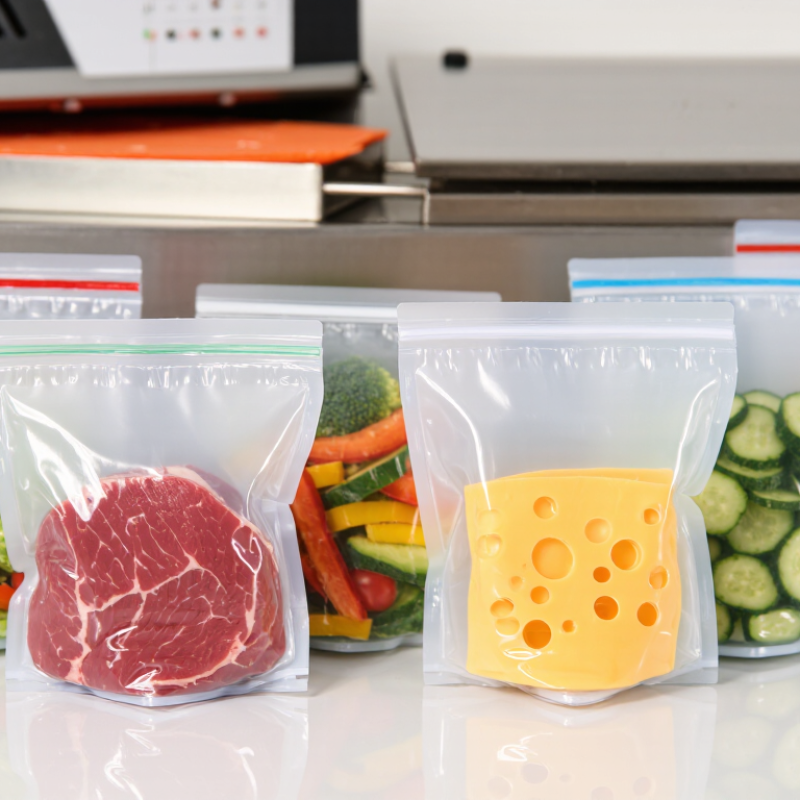
A vacuum seal pouch is a flexible, multilayer package designed to remove air before closing. It stores food with less oxygen around the product. During sealing, a pump draws air from the pouch. Heated jaws then create a tight seam. The reduced oxygen level slows oxidation and limits the growth of many aerobic microorganisms. Some films also contain oxygen-barrier layers. These layers help protect color, aroma, and texture. It is not magic. The pouch does not sterilize its contents, and refrigeration remains important for perishable foods.
Its purpose is practical: extend usable storage time, reduce freezer burn, and support portion control. FAO’s State of Food and Agriculture 2019 reported that about 14% of food is lost between harvest and retail. Better packaging can help reduce some losses, although it cannot solve poor handling or excessive production. UNEP’s Food Waste Index Report 2024 estimated 1.05 billion tonnes of food waste in 2022. That figure gives vacuum packaging a meaningful role in storage management. A careful user checks the seal for wrinkles, liquid, or tiny channels. The seal matters. A pouch with trapped air may fail early. I have also found that overfilling creates stress near the seam. The result is useful, but not flawless. Temperature, film quality, handling, and storage conditions still determine performance.
A vacuum seal pouch is a flexible package that removes air before closing. Its structure usually contains several bonded layers. The outer layer is often polyester, providing printability, stiffness, and basic heat resistance. Nylon may be added for toughness. It helps the pouch resist punctures from sharp edges or dense products.
The inner sealing layer commonly uses polyethylene or cast polypropylene. These materials soften under controlled heat and create the airtight seal. Some pouches include an oxygen-barrier layer, such as EVOH or aluminum foil. EVOH limits oxygen movement, while foil also blocks light. The right choice depends on the product, storage temperature, and required shelf life.
A pouch also has important structural zones. The seal area must remain clean and flat. A textured surface may form small air channels, helping the pump remove air from the package. Smooth chamber pouches often rely on external equipment instead. The process is straightforward: air leaves, the film collapses, and heat closes the opening.
Small details matter. A wrinkle across the seal can create a hidden leak. I have seen seemingly strong packages fail because moisture reached the sealing edge. The design is simple, but not foolproof. Excessive pressure can also damage soft products, while thin film may tear during handling. A practical inspection checks the seal width, film thickness, surface damage, and any gradual loss of vacuum.
A vacuum seal pouch is a flexible, airtight package designed to protect contents from air, moisture, and external contamination. Its structure usually includes strong plastic layers that resist punctures and tolerate controlled heat. The process begins when an item is placed inside the pouch. The open edge remains positioned inside a vacuum sealer.
The machine removes air through a small valve or open channel. As pressure drops, the pouch tightens around the item. This close contact reduces oxygen exposure and limits movement during storage. The sealer then heats the pouch’s inner layers, pressing them together to form a continuous seal. A proper seal should look even, smooth, and fully bonded. Small wrinkles can create weak points.
Details matter.
Dry the pouch opening before sealing, because moisture may interfere with bonding. Leave enough empty space near the edge for a clean seal. Sharp bones or corners should be covered with a protective layer. They can pierce the material under pressure.
The process is not flawless.
A pouch may appear sealed while holding a tiny leak. Press the package gently and check whether air returns. For perishable food, vacuum sealing does not replace refrigeration or safe handling. It slows air-related deterioration, but it does not eliminate every microbial risk. Storage temperature, pouch quality, and seal strength still require regular attention.
A vacuum seal pouch removes air from around food, then closes with a heat-sealed seam. Less oxygen slows oxidation, moisture loss, and freezer burn. The pouch also compresses soft foods, such as sliced vegetables or marinated meat. In daily storage, this creates a tighter package with fewer exposed surfaces.
Its practical value is strongest in refrigerators, freezers, and dry storage. USDA estimates that 30–40% of the U.S. food supply is lost or wasted. Better portioning can help reduce household waste. A pouch can separate single meals, flatten leftovers, and save shelf space. However, vacuum sealing does not make food shelf-stable. The USDA Food Safety and Inspection Service advises keeping refrigerated foods at 40°F or below. The FDA Food Code uses 41°F as a cold-holding limit. Oxygen-free packaging can also support certain hazards if temperature control fails. That detail is easy to overlook.
Tips: Cool cooked food before sealing. Remove sharp bones or hard edges first. Leave space near the seal. Label the pouch with its contents and date. Follow tested storage times, not appearance alone. I still inspect every seam before freezing. A small leak can undo the whole process. Never use a swollen pouch or questionable food. When in doubt, discard it.
A vacuum seal pouch removes most air around food, then closes with heat along its opening. Less oxygen can slow oxidation, freezer burn, and some spoilage changes. It does not sterilize food. The pouch only changes the storage environment, not the food’s original safety risks.
Its limits deserve attention. Moist foods can release liquid into the sealing area, weakening the closure. Sharp bones, shells, or frozen edges may puncture the plastic. A tight seal can also hide swelling, leaks, or unpleasant odors. Keep perishable food refrigerated or frozen, even after sealing. Never leave it at room temperature because the air was removed. Some harmful bacteria grow without oxygen. That point is easy to overlook. Thaw sealed food in a refrigerator, not on a warm counter. Do not heat a pouch unless its instructions clearly allow it, and never microwave an unopened pouch.
Tips: Pat food dry before sealing. Leave several centimeters above the contents. Check the seam with your fingers. If it feels wrinkled, open it and reseal. Label each pouch with its contents and date. Store raw meat below ready-to-eat food to prevent leakage. Use clean hands and tools, and discard any pouch with a broken seal or unusual odor. In practice, perfect seals are not guaranteed; a small crease can defeat careful work. Inspecting each pouch remains necessary.
| Data Dimension | Verified Information | Practical Handling Guidance |
|---|---|---|
| Definition | A vacuum seal pouch is a flexible, airtight package from which most of the air is removed before the opening is heat-sealed. | Use it as a packaging method, not as a substitute for refrigeration, freezing, cooking, or hygienic food preparation. |
| How the process works | A pump removes air from the pouch, the flexible film collapses around the contents, and a heated sealing bar fuses the pouch layers together. | Keep the seal area clean and dry. Liquids or food particles in the seal path can create leaks. |
| Effect on oxygen | Vacuum packaging substantially reduces the air surrounding the contents, but it does not guarantee a complete absence of oxygen or prevent oxygen from entering through leaks. | Check for a firm, continuous seal and discard or repackage any pouch that loses its vacuum, leaks, or becomes visibly damaged. |
| Suitable contents | Solid foods, portioned meat, fish, cheese, vegetables, dry goods, and non-food items that fit the pouch and do not puncture it. | Pre-freeze soft or moist foods when necessary so they do not get drawn into the sealing channel during vacuuming. |
| Contents requiring caution | Fresh garlic, mushrooms, and some low-acid foods may present special safety concerns when stored in oxygen-reduced conditions. | Follow current food-safety guidance for these foods. Vacuum sealing does not make them safe for unrefrigerated storage. |
| Temperature control | Perishable vacuum-sealed food still requires prompt refrigeration at 4°C or below, or freezing at approximately −18°C or below for long-term frozen storage. | Move perishable food into the refrigerator or freezer soon after sealing. Do not store it at room temperature simply because it is vacuum packed. |
| Food safety risk | Reduced oxygen can slow oxidation and some spoilage processes, but it can also support the growth of certain harmful microorganisms if temperature and time are not controlled. | Never rely on smell or appearance alone to determine whether vacuum-sealed food is safe. |
| Room-temperature limitation | Vacuum sealing does not make perishable food shelf-stable. Shelf stability requires additional validated controls such as commercial sterilization, approved formulation, or another proven preservation process. | Treat vacuum-sealed meat, seafood, dairy, cooked foods, and cut produce as perishable unless a validated shelf-stable process has been used. |
| Safe cooling practice | Cooked food should be cooled promptly in shallow portions before or during refrigerated storage; sealing hot food can trap heat and delay cooling. | Do not use the pouch as a replacement for rapid cooling. Leave adequate space for expansion when freezing. |
| Material compatibility | Pouches are commonly made from multilayer plastic films that provide flexibility, strength, and a heat-sealable inner layer. Not every pouch is suitable for every temperature or appliance. | Use only packaging marked or documented as suitable for freezing, boiling, sous vide, microwave heating, or other intended applications. |
| Puncture and abrasion risk | Bones, shells, sharp edges, and frozen corners can puncture flexible film and allow air or liquid to enter. | Wrap sharp foods with an appropriate protective layer or use a stronger pouch. Avoid overfilling and excessive compression. |
| Seal inspection | A reliable seal should be continuous, fully fused, and free from folds, channels, food residue, or burn-through. | Inspect every seal before storage. If uncertain, cut away the old seal and reseal using a clean, dry section. |
| Freezer use | Vacuum packaging can reduce freezer burn by limiting contact with air, but it cannot prevent quality loss indefinitely. | Label the pouch with the contents and date, keep it continuously frozen, and use sensible freezer-storage periods for best quality. |
| Opening the pouch | Opening releases the vacuum and exposes the contents to air. Liquid may also be present inside the pouch. | Open carefully over a clean surface, prevent spills, and use or refrigerate the contents according to normal perishable-food guidance. |
| When to discard | Discard a pouch if it is swollen, leaking, torn, has a failed seal, has been held at unsafe temperatures, or has an unexplained change in odor, color, or texture. | When in doubt, discard the contents. Do not taste questionable food to test its safety. |