Choosing reliable shipping tubes manufacturers in China requires more than comparing catalog prices. A strong supplier must balance tube strength, material consistency, production capacity, and export experience. These details matter when a poster arrives with crushed corners or a blueprint shows moisture damage.
Walter Soroka, a respected packaging educator and author of Fundamentals of Packaging Technology, wrote, “Packaging is the science, art and technology of enclosing and protecting products.” His definition fits shipping tubes well. A tube may look simple, yet its spiral-wound kraft layers, adhesive seams, wall thickness, and end caps determine real-world performance.
This guide examines leading Chinese manufacturers through practical criteria. We consider product range, customization ability, quality control, certifications, minimum order quantities, and communication standards. We also look at sample testing, drop resistance, moisture protection, and carton packing methods.
Details reveal quality.
A dependable factory should explain its paper grades clearly. It should also provide production photos, inspection records, and realistic lead times. Factory audits and independent sample checks can reduce uncertainty, although they cannot remove every risk.
No supplier wins every test. Some factories offer excellent customization but limited overseas service. Others provide fast delivery but fewer sustainable material options. That trade-off deserves honest attention.
We may also overlook small issues. Poorly fitted plastic caps, weak labels, or inconsistent tube lengths can create expensive problems. The best shipping tubes manufacturers in China are not simply the cheapest suppliers. They are partners that protect products, communicate accurately, and improve their process when something goes wrong.
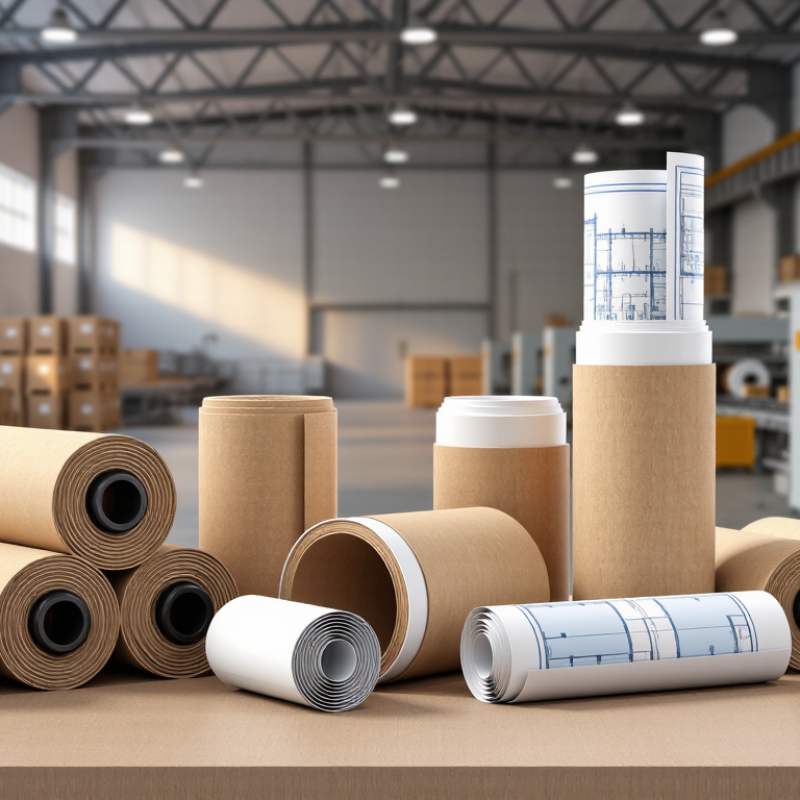
Shipping tubes are rigid, hollow packages made from spiral-wound or convolute paperboard. They protect posters, drawings, certificates, textiles, and other flexible products from bending. Typical tubes use plastic or paper end caps, while stronger versions include thicker walls and reinforced edges. They are light, stackable, and easy to label.
The 2023 Smithers report, The Future of Global Corrugated Packaging to 2028, estimates that global corrugated packaging will grow from about $205.7 billion in 2023 to $240.1 billion by 2028. This wider trend supports demand for efficient paper-based shipping formats, including tubes. However, tubes are not automatically waterproof. Moisture-resistant coatings or inner liners may be necessary for humid routes and outdoor delivery.
In practice, Chinese manufacturers usually match tube diameter, length, wall thickness, closure style, and print requirements to the product. A 60-centimeter poster needs different protection from a heavy architectural drawing. Drop testing should follow recognized packaging procedures, such as ASTM D4169, before large production runs. That step matters. Some suppliers focus on appearance but provide limited compression data. I have found that small details, like loose caps or uneven winding, can cause avoidable damage. Recycled paper content also deserves verification through supplier documents, not only sales claims.
When evaluating China’s shipping tube manufacturers, look beyond product photos and quoted prices. A dependable supplier should explain how tube diameter, wall thickness, length, and end closures are controlled. Ask for a current specification sheet and samples made on the same production line as your order. Measure them yourself. Small details matter.
Check whether the tube suits the actual shipment: a poster tube has different needs from a heavy drawing or rolled textile. Request evidence of compression or transit testing, and ask how results are recorded by batch. Inspect sample seams, cap fit, and exposed edges. A neat sample is useful, but it does not prove consistent production. That distinction is easy to miss.
Assess manufacturing capability through a facility review, live video inspection, or independent audit where practical. Confirm equipment, daily output, quality checkpoints, and how defects are handled. Review certificates carefully: verify the issuing body, dates, and product scope rather than relying on a logo in a brochure. Paperwork is not proof. Ask for recent order references and realistic lead times, including peak-season delays. Communication also reveals a lot; vague answers about tolerances or rejected batches deserve follow-up. No single score can capture every risk, and even a careful review may leave gaps.
China’s leading shipping-tube manufacturers are best assessed by production consistency, customization, and protective performance—not simply factory size. Look for spiral-wound paper tubes with clean-cut edges, sturdy end caps, and dimensions matched to the item being shipped. Reliable suppliers should document wall thickness, compression resistance, and quality checks across production batches. They should also explain how recycled paper affects strength and surface finish.
Demand is supported by China’s large parcel economy. The National Bureau of Statistics reported 2024 online retail sales of 15.5 trillion yuan, with physical-goods sales reaching 13.08 trillion yuan. The State Post Bureau reported 174.5 billion express-delivery parcels that year. These figures indicate packaging demand, but they do not measure shipping-tube sales or identify market leaders. That distinction matters. Publicly available data do not provide a verified ranking of Chinese tube manufacturers by shipping-tube market share. Buyers can compare suppliers through samples, compression-test results, production capacity, and delivery records. A small test order helps reveal real-world fit. I would not treat a polished sample as proof of consistent bulk quality.
Shipping-tube manufacturers in China commonly make spiral-wound paper tubes for posters, drawings, fabric samples, and other roll-shaped goods. Buyers can often request different lengths, diameters, wall thicknesses, and end closures. Kraft-paper surfaces are common, while printed or plain finishes suit different packing needs. Fit matters. A tube that is too wide may let contents shift during transit.
Many manufacturers also provide custom sizing, sample production, printing, and bulk packing. Some can add plastic end caps or paper plugs to help keep dust and moisture out. Ask how the tube is tested for compression and handling, and whether the sample uses the same materials as the production order. A clear specification helps, but it cannot predict every shipping condition. Sometimes a first sample needs revision; that is worth allowing for.
Tips: Share the rolled item’s dimensions and weight before requesting a quote. Confirm the tube’s internal diameter, wall thickness, cap fit, and packing method. Keep one filled sample for a practical shake and drop check.
Example shipping-tube lengths (inches)
Paper-tube manufacturers commonly offer spiral-wound tubes in different lengths and diameters, with end caps, custom cutting, printing, and packaging options. The lengths shown are practical size examples, not market-share figures or a ranking; available specifications vary by supplier and order.
Selecting a Chinese shipping tube supplier starts with the cargo, not the catalogue. Measure the item’s length, diameter, weight, and any sharp or fragile edges. Then share the route and storage conditions, since long journeys and damp warehouses can affect packaging performance. Ask about paper grades, wall thickness, end-cap fit, and available lengths. Fit matters. Request samples made to your actual specifications, not just a similar size. Check whether caps stay secure and whether tubes bend or split under ordinary handling. A clean sample is useful, but it cannot prove every production batch will match.
Compare suppliers on repeatability as well as price. Ask how they inspect dimensions, record batch checks, and handle defects. Request a written quotation that separates tube cost, tooling charges, packaging, and delivery time. Ask directly. Confirm minimum order quantities and whether the supplier can meet your expected reorder schedule. Clear answers are a practical sign of a well-managed process, though they are not a guarantee. If possible, inspect production or use an independent quality check before a large order. One sample can still mislead; buyers should judge communication, documented specifications, and delivered goods together.
A name-free supplier evaluation table for comparing Chinese shipping tube manufacturers. Use the evidence column to assess individual suppliers rather than relying on an unsupported ranking.
| Evaluation Dimension | What to Compare | Evidence to Request | Why It Matters |
|---|---|---|---|
| Product fit | Available tube materials, internal diameter, length, wall construction, and end closures. | Technical drawings, product specifications, and samples made to the requested dimensions. | A tube should fit the product and help prevent movement or damage during handling and transit. |
| Material and protection | Paperboard grade, tube construction, surface finish, and compatibility with the product’s weight and shipping conditions. | Material specifications and sample evaluation using the buyer’s product and packing method. | Protection depends on the complete package design, not just the tube’s outer appearance. |
| Customization capability | Custom sizes, printing, labels, colors, and closure options. | Pre-production sample or proof showing the agreed dimensions, artwork, and closure. | Approval before production helps reduce specification misunderstandings. |
| Quality management | Documented inspection procedures, production controls, and handling of nonconforming products. | Current quality-system documentation, inspection records, and a written corrective-action process. | Consistent controls make it easier to identify and address quality issues across orders. |
| Packaging performance | Whether the finished package is suitable for the intended distribution route and handling risks. | Test plan or test results for the complete packaged product. Ask whether testing follows a relevant method, such as an applicable ISTA procedure. | Transit performance should be evaluated for the actual product and shipping configuration. |
| Responsible sourcing | Whether paper-based material sourcing claims are relevant to the buyer’s requirements. | Valid chain-of-custody documentation when a supplier makes a certified sourcing claim; verify the certificate and its scope. | Certification claims should be checked against current documents rather than assumed from marketing statements. |
| Order terms and capacity | Minimum order quantity, production schedule, sample lead time, and capacity for repeat orders. | A written quotation and schedule covering the specified product, order quantity, and delivery terms. | These terms vary by supplier and order, so compare like-for-like quotations instead of relying on general estimates. |
| Export and delivery readiness | Export packing, shipping marks, documentation support, and proposed delivery arrangements. | Sample export documents or a written list of documents and responsibilities for the proposed shipment. | Clear responsibilities help buyers plan international shipments and avoid preventable documentation gaps. |
| Communication and service | Response quality, technical clarification, sample coordination, and complaint follow-up. | Written answers to the same specification checklist and a defined process for handling issues. | Responsive, specific communication makes order requirements easier to confirm and manage. |
| Total cost | Unit price together with tooling, sampling, printing, packing, freight, and other quoted charges. | An itemized quotation based on the same specifications, order quantity, and delivery terms for each supplier. | A comparable total-cost view is more useful than comparing unit prices alone. |
Buyer tip: Send every shortlisted supplier the same drawing, material requirements, order quantity, destination, and delivery terms. Confirm final specifications and approved samples in writing before placing a production order.