China Top 10 Plastic Container Manufacturers?

China’s plastic container industry serves food, beverage, cosmetic, pharmaceutical, and household brands worldwide. Its manufacturers offer high-volume production, custom molds, and competitive development timelines. However, a strong factory is not defined by price alone.

This guide examines ten leading Chinese manufacturers through practical purchasing criteria. These include material selection, container design, mold capability, production capacity, quality control, and export experience. It also considers food-contact documentation, recyclable options, closure compatibility, and packaging performance during transport. A reliable supplier should explain resin grades clearly and provide samples before mass production.

Details matter here. A bottle’s neck finish must match its cap precisely. Wall thickness should remain consistent around corners and shoulders. Small defects can cause leakage, label distortion, or stacking failures. Factory audits, inspection records, and third-party testing can reveal more than polished product photos. Even so, rankings are never permanent. Market data changes, and a manufacturer praised today may struggle with lead times tomorrow.

This overview is designed for informed comparison, not blind selection. Each plastic container supplier should be evaluated against your product, market, and compliance requirements. Ask direct questions. Request recent samples. Check communication during revisions. The best choice may not be the largest company. It may be the one that understands your filling line, protects your product, and delivers consistently. Mistakes still happen, even with experienced suppliers. Careful verification remains essential.
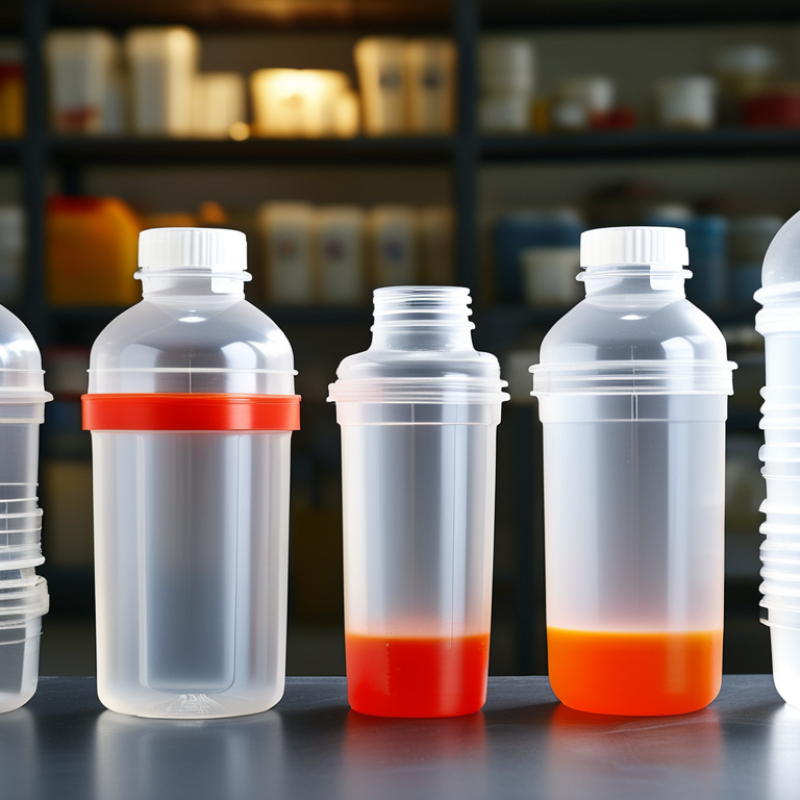
China Top 10 Plastic Container Manufacturers?

## Definition and Scope of China’s Plastic Container Manufacturing Industry

Definition and Scope of China’s Plastic Container Manufacturing Industry

China’s plastic container industry covers the design, molding, printing, assembly, and testing of rigid polymer packaging. Typical products include bottles, jars, tubs, pails, drums, and food storage boxes. Closures may be included when they are produced within the same manufacturing chain. Flexible films are usually excluded.

The scope is wider than household packaging. It includes containers for food, beverages, personal care, agriculture, healthcare, chemicals, and industrial materials. Materials commonly include PET, HDPE, PP, PVC, and recycled resin blends. The National Bureau of Statistics reported about 74.9 million tonnes of plastic product output in China in 2023. This figure covers all plastic products, not containers alone. That distinction matters.

China Packaging Federation reports continued demand for lightweight and recyclable packaging in its 2024 industry analysis. Global data from OECD’s Global Plastics Outlook shows packaging represented about 40% of worldwide plastic use in 2019. Chinese container manufacturers therefore compete on more than production volume. They must manage mold accuracy, wall-thickness control, leakage tests, food-contact documentation, and recycled-content traceability. Factory experience still matters. A fast molding line can produce weak necks or uneven bases when process control slips. The boundary is not perfect. Some manufacturers also produce caps, labels, or filling equipment, making comparisons difficult. A meaningful “top ten” list should therefore compare verified container revenue, material capability, export records, compliance systems, and actual production capacity, rather than online visibility alone.

China Top 10 Plastic Container Manufacturers?

Definition and Scope of China’s Plastic Container Manufacturing Industry

China’s plastic container industry is part of the broader plastic-products manufacturing sector and includes bottles, jars, tubs, drums, tanks, closures, and other rigid or semi-rigid packaging formats. The chart uses China’s reported total plastic-products output as an industry-scale proxy because official statistical releases do not consistently publish a separate national series for plastic containers alone.

Source: National Bureau of Statistics of China, China Statistical Yearbook and annual industrial production data. Output is shown in million metric tonnes and does not represent any individual company or brand.

## Criteria for Selecting the Top 10 Plastic Container Manufacturers

Choosing China’s top 10 plastic container manufacturers requires more than comparing online rankings. A credible selection begins with proven industry experience, stable production records, and product knowledge. Review how long each factory has served its main markets. Ask for samples from recent production batches, not only polished showroom pieces. Check molding accuracy, wall thickness, closure fit, and resistance to drops or pressure.

Reliable manufacturers should provide clear material specifications, batch traceability, and documented quality procedures. Their factories should explain inspection points, equipment maintenance, defect rates, and corrective actions. Independent audits, relevant testing reports, and legally recognized management certifications add confidence, but certificates alone prove little. A factory visit can reveal practical details, such as clean storage areas, organized tooling, and labeled inspection stations.

Production capacity also matters. Compare tooling control, minimum order quantities, sample timelines, and delivery performance against your actual demand. Ask whether the manufacturer can maintain color, dimensions, and sealing performance across repeated orders. Check communication during a technical change. It often exposes more than a sales presentation. Some suppliers report impressive capacity but cannot show consistent records. That deserves careful questioning. Environmental controls, worker safety, and compliance with destination-market requirements should also be verified before ranking any supplier among the top 10.

China Top 10 Plastic Container Manufacturers? – Criteria for Selecting the Top 10 Plastic Container Manufacturers

No. Selection Criterion Recommended Weight Practical Evaluation Indicators Evidence to Verify
1 Manufacturing Capacity 15% Number of production lines, annual output, machine availability, and ability to support repeat orders. Audited capacity statement, production records, equipment list, and factory audit.
2 Product Range 10% Availability of bottles, jars, tubs, jerry cans, closures, and packaging for food, personal care, household, and industrial applications. Current product catalogue, technical drawings, material specifications, and sample review.
3 Material and Resin Control 10% Use of appropriate PET, HDPE, PP, LDPE, or other specified resins; traceability of virgin and recycled content. Material certificates, supplier traceability records, recycled-content declarations, and laboratory reports.
4 Quality Management 15% Documented inspection procedures, dimensional control, appearance standards, defect management, and corrective-action systems. ISO 9001 certificate where applicable, inspection plans, control charts, complaint records, and audit results.
5 Food and Product Safety Compliance 12% Suitability for the intended application and compliance with applicable food-contact, chemical, cosmetic, or pharmaceutical packaging requirements. Food-contact declarations, migration-test reports, GMP documentation, and destination-market compliance files.
6 Customization and Tooling Capability 10% In-house or controlled mould development, decoration options, colour matching, neck-finish compatibility, and prototype support. Mould drawings, prototype samples, tooling quotations, development lead times, and approved specifications.
7 Sustainability Performance 10% Lightweighting, recyclability, recycled resin options, scrap reduction, energy management, and packaging efficiency. Environmental policy, material declarations, energy data, waste records, and relevant management-system certificates.
8 Export and Logistics Capability 8% Experience with export documentation, container loading, shipping coordination, packaging protection, and delivery planning. Shipping records, export references, packaging tests, delivery-performance data, and logistics procedures.
9 Commercial Competitiveness 5% Total landed cost, minimum order quantity, tooling cost, payment terms, price stability, and value over the product life cycle. Comparable quotations, cost breakdowns, payment terms, tooling agreements, and total-cost analysis.
10 Customer Service and Reliability 5% Responsiveness, technical support, order communication, after-sales handling, and consistency of delivery performance. Reference checks, service-level records, response-time logs, complaint-resolution reports, and delivery history.
Total Evaluation Weight 100% Use documented evidence and comparable scoring before ranking qualified manufacturers.

## Profiles of China’s Leading Plastic Container Manufacturers

China’s leading plastic container manufacturers differ by process, material, and end-use experience. These profiles focus on practical capabilities rather than unverified rankings.

Profile one specializes in HDPE bottles for household cleaners, using leak testing and torque checks.

Profile two produces PET containers for beverages, with strong control over wall thickness and clarity.

Profile three focuses on pharmaceutical packaging, supporting clean production areas and batch traceability.

Profile four makes wide-mouth jars for food and personal-care products, with attention to seal performance.

Profile five serves industrial buyers with chemical-resistant drums and reinforced closures.

Profile six develops lightweight containers, reducing resin use without sacrificing stacking strength. Not always successfully.

Profile seven offers custom injection molding for caps, lids, and small containers.

Profile eight combines extrusion blow molding with rapid tooling adjustments for varied volumes.

Profile nine emphasizes recycled-content packaging, though color consistency can remain difficult.

Profile ten supports export orders through inspection records, material declarations, and controlled carton packing.

Experienced buyers should request resin specifications, sample measurements, and recent quality reports. Factory visits can reveal details that brochures often omit. Check the floor.

Reliable manufacturers usually explain mold ownership, minimum order quantities, testing methods, and delivery limits clearly. They should also identify whether production is handled internally or through subcontractors. A capable supplier can discuss drop tests, temperature resistance, closure compatibility, and storage conditions. However, production quality may vary between container sizes and seasonal batches. Independent sampling remains wise. These manufacturers serve different markets, so the best choice depends on product chemistry, filling equipment, target volume, and compliance requirements.

## Product Categories, Materials, and Manufacturing Capabilities

China Top 10 Plastic Container Manufacturers?

A useful comparison of China’s top ten plastic container manufacturers should begin with product categories, not advertising claims. Their portfolios commonly include bottles, jars, jerry cans, drums, tubes, pails, and custom closures. Food, personal care, household, agricultural, and industrial packaging require different designs. A narrow-neck bottle may suit liquid soap, while a wide-mouth jar supports powders or creams. Small details matter.

Materials shape performance. PET offers clarity and a firm appearance for many beverage and cosmetic containers. HDPE provides impact resistance and chemical durability. PP handles heat better in selected applications, while LDPE adds flexibility to squeezable packaging. Some manufacturers also process recycled-content materials, but availability and certification should be checked carefully. Do not trust a material label alone.

Manufacturing capabilities separate experienced suppliers from simple traders. Common processes include extrusion blow molding, injection molding, injection blow molding, and stretch blow molding. Advanced facilities may provide automatic trimming, leak testing, torque testing, dimensional checks, and controlled clean areas. Ask for wall-thickness data, batch records, migration documents, and sample approval procedures. A polished catalog can hide uneven quality. I have found that closure fit and label alignment often deserve more attention than appearance. Tooling support, color matching, mold maintenance, and production capacity also affect delivery reliability. Some suppliers promise fast customization, yet complex molds still require realistic testing time.

## How to Compare Suppliers for Quality, Compliance, and Export Services

Choosing among China’s top plastic container manufacturers requires more than comparing online prices. Start with the material, closure design, wall thickness, and intended filling process. Ask for recent samples, not only polished catalogue photos. A useful supplier should explain resin grades, molding tolerances, leak testing, and batch traceability in clear language.

Quality evidence should include inspection records, material declarations, and test reports from qualified laboratories. Check whether certificates match the actual factory and product, including size, resin, and production site. A remote video tour helps, but an independent factory audit gives stronger evidence. Review complaint handling too. Fast replies are useful, but documented corrective actions matter more.

Export capability often appears in small details. Request carton dimensions, pallet plans, loading photos, and shipping timelines. Confirm that labels, packing lists, invoices, and customs descriptions remain consistent. Ask how the supplier protects containers from dust, deformation, and moisture during transport. Payment terms and lead times should be written clearly. I once saw a low-cost sample pass inspection, while the second production batch had uneven necks. That experience changed my view: one successful sample cannot prove stable manufacturing. No scorecard is perfect. Compare at least three suppliers using the same criteria, and record every unanswered question before placing an order.