2026 Top Plastic Clamshell Containers for Wholesale Buyers?

Wholesale buyers comparing plastic clamshell containers for 2026 need more than a low unit price. They need packaging that fits the product, survives handling, and works on existing packing lines. A berry punnet, bakery tray, and electronics case each face different demands. Hinge strength, closure consistency, wall thickness, and visibility all matter. Small defects add up across a large order.

Sustainable-design expert William McDonough uses the phrase “Waste equals food” to express a circular design principle. For buyers, that idea is a useful prompt: ask what material a container uses and whether local recovery systems accept it. It is not a guarantee that every package will be recycled. Details matter. Ask suppliers for resin specifications, product samples, case-pack dimensions, and written quality tolerances. Then test real products in the actual filling and shipping process. A clear lid may show fresh produce beautifully, but condensation can cloud it during cold storage. That is easy to miss in a catalog.

This guide compares options by application, material, durability, and wholesale practicality. It also flags trade-offs, because the cheapest clamshell may require more careful handling or create fit problems. No single container suits every buyer. Start with the product and supply chain, not the sales claim. And leave room to reconsider. A sample that looks perfect on a desk may behave differently on a busy packing line.
2026 Top Plastic Clamshell Containers for Wholesale Buyers?

What Plastic Clamshell Containers Are and How They Work

2026 Top Plastic Clamshell Containers for Wholesale Buyers?
What Plastic Clamshell Containers Are and How They Work

A plastic clamshell container has two connected sections that fold together around a product. The hinge usually runs along one edge, while tabs or a snap-fit rim hold the opposite sides closed. Many food containers are thermoformed from a single sheet, though designs and materials vary. Clear walls let staff and customers see the contents without opening the package. That hinge matters.

For wholesale buyers, the shape can protect items during handling and make packing straightforward. Small vents may help manage moisture in some produce containers, but they are not right for every product. A tight closure can reduce spills, yet it does not automatically make a container leakproof. Check the supplier’s specifications and test a sample with your actual product.

Tips: Compare inside dimensions, not just the outer footprint. Close and reopen samples several times. Look for tabs that engage evenly, lids that stay shut when stacked, and enough room to avoid crushing delicate contents. Keep samples.

A clear lid can still fog when warm contents meet cooler air. Stack height, storage temperature, and product shape can affect performance, too. Ask how the container handles your packing line and typical transport conditions. A minor fit issue may seem unimportant on one sample, but become costly across a large order.

Common Clamshell Types and Materials for Wholesale Buyers

2026 Top Plastic Clamshell Containers for Wholesale Buyers?

Common Clamshell Types and Materials for Wholesale Buyers

Wholesale clamshells usually come in three practical styles: one-piece hinged packs, separate bases with lids, and compartment trays. Hinged packs open quickly and keep small items together. Separate lids can make filling easier, but they may shift during transport if the fit is loose. Compartment trays help prevent items from touching, though they use more plastic and take up extra storage space. Fit matters.

PET and recycled PET are common choices when product visibility matters. Their clear walls show color and surface detail, which can help shoppers assess fresh produce or small retail goods. Polypropylene is more flexible and may suit products needing greater heat tolerance, depending on the design. Material performance varies by thickness and shape. A clear lid alone does not prove a pack is sturdy; press the corners and test the closure with a filled sample. There is no universal winner. I would not treat appearance as proof of quality.

Tips: Before ordering in bulk, check the inner dimensions, hinge strength, stacking stability, and case-pack quantity. Test samples with your actual product, not an empty container. Ask suppliers for material specifications and relevant food-contact documentation when packaging food. Small details can matter.

Key Features to Compare When Choosing Clamshell Containers

For wholesale buyers, clamshell performance starts with the product inside. Compare internal dimensions, hinge strength, closure security, and wall thickness. A lid that pops open under pressure can damage produce or create extra packing work. PET usually provides clear product visibility, while polypropylene may suit warmer applications, depending on the resin grade. Ask suppliers for food-contact documentation and temperature limits. Check whether vents are positioned to release moisture without exposing delicate items.

Fit matters. Test samples with your actual products, not empty containers. Stack filled units to check crushing, shifting, and shelf stability. Compare case counts, carton dimensions, and freight cost per usable container; a low unit price can be offset by bulky shipping. EPA’s 2018 Advancing Sustainable Materials Management report estimated that 8.7% of plastic municipal solid waste was recycled in the United States. That figure covers plastics broadly, not clamshells specifically, but it is a useful reminder: confirm local collection options before treating “recyclable” as a practical benefit.

Tips: Request samples in the intended resin and thickness. Run a simple drop test, then inspect hinges and closures after repeated opening. One detail buyers sometimes overlook is stacking height; small differences can affect storage and delivery costs. Test real loads.

Top Clamshell Container Options by Product and Industry

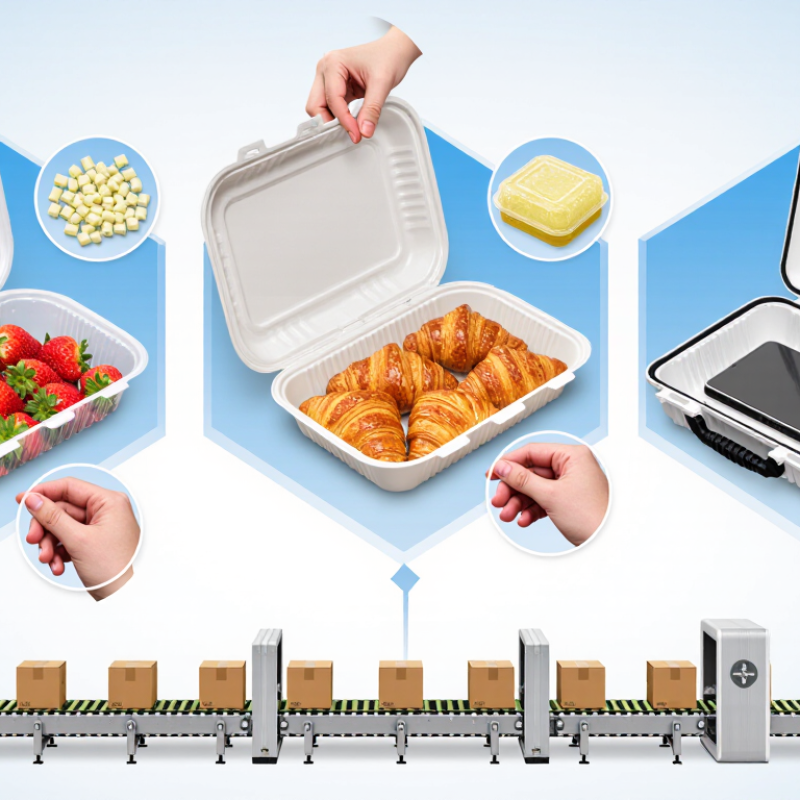
Fresh produce clamshells need to protect delicate items without trapping excess moisture. Berry packs often use small ventilation holes and a secure hinged lid. For tomatoes or stone fruit, buyers may prefer deeper cavities that reduce pressure during stacking. Check the dimensions against the actual product, not just the stated capacity. Details matter.

Bakeries and deli counters often choose clear, rigid containers to display pastries, sandwiches, or prepared sides. A wide opening helps staff pack items quickly, while a firm latch can limit accidental opening during delivery. For heavier portions, compare wall thickness and hinge strength using filled samples. A container that looks sturdy empty may flex when stacked. That small test can prevent a costly mismatch.

Electronics and hardware retailers may need clamshells shaped around small components, cables, or fasteners. In these cases, a close-fitting cavity can keep pieces visible and reduce movement. Material choice also matters: PET or rPET may suit clear display needs, while polypropylene can offer useful flexibility for some designs. Confirm the intended use and local recycling access with suppliers.

A common buying mistake is judging only the unit price. Tooling, shipping volume, closure performance, and damaged-product rates all affect the real cost. There is no universal best option; the right choice depends on the product, handling conditions, and shelf space.

How to Evaluate Suppliers, Pricing, and Compliance in 2026

2026 Top Plastic Clamshell Containers for Wholesale Buyers?
How to Evaluate Suppliers, Pricing, and Compliance in 2026

Compare quotes on the same basis: resin type, dimensions, hinge design, wall thickness, and units per case. Ask for separate costs for tooling, freight, setup, and any resin-price adjustments. A low unit price can hide expensive shipping or high minimum orders. Ask for proof. Request production samples, then check how the lids close, stack, and hold up after repeated opening. A clear sample can still have a brittle hinge.

Market data makes material choices worth examining. Plastics Europe’s Plastics – the Fast Facts 2024 reports global plastics production of 413.8 million tonnes in 2023. The OECD’s Global Plastics Outlook reports that only 9% of plastic waste was recycled in 2019. These figures do not predict clamshell prices, but they underline the value of asking suppliers for material specifications and documented recycled-content claims.

For food-contact packaging, request applicable declarations and test records for the intended market and use. Check that documents match the exact resin, color, and manufacturing site—not merely a similar product. Confirm how the supplier handles traceability, quality complaints, and changes to materials. A certificate is useful, but it is not the whole answer. Requirements differ by destination, so verify current rules before placing a large order.

2026 Top Plastic Clamshell Containers: Wholesale Buyer Evaluation

Illustrative supplier scorecard across key purchasing criteria

Scores are illustrative (1 = weak, 5 = strong), not measured supplier or market data. Compare written quotes, sample testing, delivery records, and food-contact documentation for the destination market before selecting a supplier.