


What Are the Top Mesh Bag Types for 2026?
Mesh Bags in 2026 are not one-size-fits-all. A produce bag that holds apples needs different mesh, seams, and closures from a laundry sack or a beach tote. This guide compares practical types by their everyday jobs: carrying fresh food, sorting washing, storing toys, shopping, and transporting bulky gear. Small details matter. A tight weave can help contain smaller items, while a reinforced base may handle heavier loads. Check the stitching, drawcord, handle attachment, and care instructions before choosing. Looks are not enough.
To avoid presenting an invented quotation as fact, the following is an illustrative line from a fictional packaging specialist, Lena Hart: “Choose the mesh for the load, not just the look.” The principle is simple. Yet it is easy to overlook when a bag feels light and flexible in the shop. The sections ahead examine produce and grocery mesh bags, laundry and storage styles, drawstring options, and larger utility designs. They also consider material, ventilation, durability, and cleaning. A recycled-fiber label may sound reassuring, but it does not tell you how well a seam will hold after repeated use. That deserves a closer look. By matching bag type to task, readers can compare options with clearer expectations—and notice where product claims leave questions unanswered.
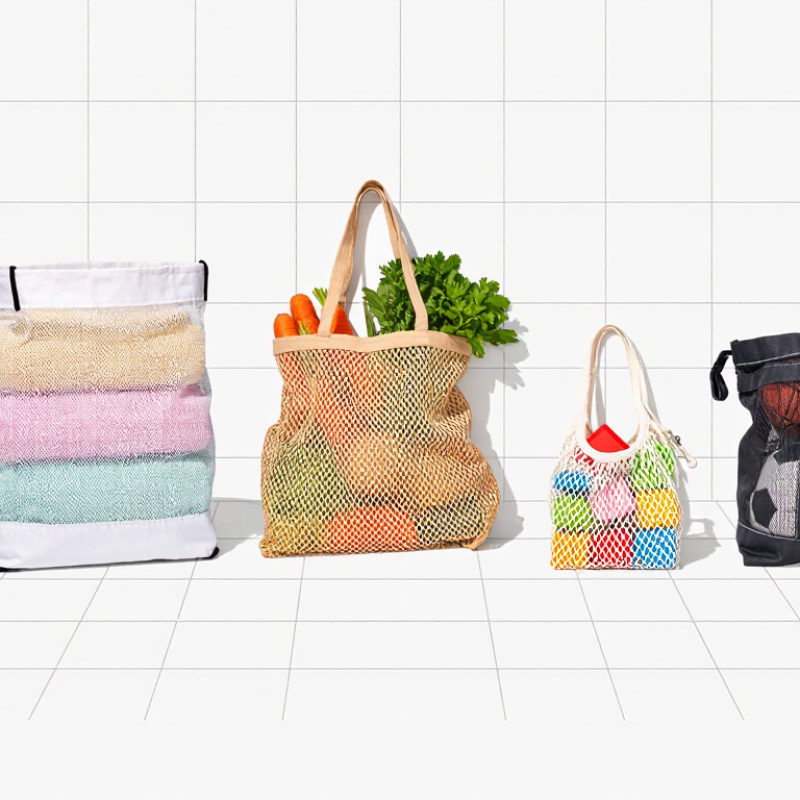
How Mesh Bags Are Designed and Classified
Mesh bags are best classified by how their mesh, shape, and closure work together. The openings may be fine and uniform, or wide enough to show the contents clearly. Fine mesh can help contain small items, while larger openings allow more airflow. Small details matter.
Construction is another useful distinction. Knitted mesh stretches and bends easily, making it suitable for soft, flexible bags. Woven mesh tends to hold a more regular shape, though its stiffness depends on the fiber and weave. Common fibers include polyester, nylon, and cotton; each behaves differently when wet, loaded, or washed. A label alone does not tell the whole story. Seams and handles often reveal how a bag may perform under repeated use.
Shape and closure help match a design to its job. A drawstring pouch closes quickly, while a zippered style can keep loose contents more contained. Flat bags pack neatly; gusseted bags offer extra room for bulky objects. Fit matters, too. A produce bag needs openings that suit the item, while a laundry bag needs seams that tolerate movement. In 2026, compare mesh size, stitching, handle attachment, and care instructions—not just appearance. Specifications can still leave questions, so checking the actual construction is worthwhile.
What Are the Top Mesh Bag Types for 2026? - How Mesh Bags Are Designed and Classified
| Mesh Bag Type | Typical Construction | Common Materials | Closure and Carry Design | Typical Uses | Key Design Considerations |
|---|---|---|---|---|---|
| Produce Mesh Bag | Lightweight open netting, often with a reinforced top edge | Polyester, nylon, or cotton; some reusable versions use other plant-based fibers | Drawstring, cord lock, or simple open top; may include a small label area | Shopping for and storing onions, citrus, and other produce that benefits from airflow | Choose mesh openings suited to the size of the items; a tighter weave helps contain smaller produce but reduces airflow. |
| Laundry Mesh Bag | Flexible mesh body with stitched seams; some designs have a protective flap | Usually polyester or nylon | Zipper or drawstring closure; commonly shaped as a flat pouch or cylindrical bag | Separating delicate garments, small clothing items, or socks during machine washing | Mesh opening size and seam strength affect protection and durability. A zipper cover can help reduce snagging. |
| Drawstring Mesh Bag | Simple pouch made from mesh panels, with a cord channel along the opening | Polyester, nylon, or cotton | Drawcord closure; can be carried by the cord or attached to a hook | Storing toys, travel accessories, sports gear, and other items that need ventilation | Bag dimensions, cord length, and mesh strength should match the size and weight of the contents. |
| Mesh Tote Bag | Open-top bag with a broad body and reinforced handles; may include a solid base or pockets | Polyester, nylon, cotton, or mixed fabrics | Fixed shoulder or hand-carry handles; some styles add a snap or zip pocket | Market shopping, everyday carrying, and transporting items that can be visible or ventilated | Handle attachment points and bottom reinforcement are important when carrying heavier loads. Open mesh offers limited privacy. |
| Beach Mesh Bag | Roomy mesh body designed to let sand and moisture escape; may have a fabric base | Often polyester or nylon mesh with webbing handles | Open top, snap, or zipper; usually has long handles for carrying | Carrying towels, water toys, and beach accessories | Quick drainage and easy cleaning are useful features. A zipper or inner pocket can help keep small items separate. |
| Sports Equipment Mesh Bag | Large mesh sack or duffel-style body, sometimes with a reinforced bottom | Typically polyester or nylon mesh with woven fabric reinforcement | Drawstring, zipper, or a combination; handles or shoulder straps are common | Carrying balls, protective gear, uniforms, and other sports equipment | Ventilation helps damp gear air out, while reinforced seams and suitable capacity support heavier or bulky contents. |
| Mesh Storage Bag | Flat pouch, zippered cube, or hanging organizer with one or more mesh panels | Polyester or nylon mesh, often combined with woven fabric | Zipper, hook-and-loop fastening, or drawstring, depending on the format | Organizing travel items, toys, craft supplies, and household accessories | Clear visibility makes contents easier to identify. Select dimensions and closure style according to storage location and item size. |
| Mesh Laundry Hamper | Upright, flexible mesh container; some designs use a frame or collapsible supports | Polyester or nylon mesh with fabric edging or support panels | Open top, drawstring top, or removable liner; handles may be added for carrying | Collecting and transporting laundry while allowing air circulation | Opening size, stability, and carry handles influence everyday convenience. Follow the care instructions for the materials and frame. |
| Mesh Produce Sack for Washing | Small, close-knit pouch designed to hold produce while it is rinsed | Commonly nylon or polyester mesh | Drawstring or secure cord closure | Rinsing small produce items in a sink or under running water | Use a secure closure and mesh openings small enough to retain the contents. Clean and dry the bag between uses. |
How to classify mesh bags: Compare the intended use, mesh material and opening size, bag shape, closure, carrying features, and reinforcement. Material and construction vary by product, so check the care and load guidance supplied with each bag.