China Best Child Proof Metal Box Manufacturer?

Choosing a China Best Child Proof Metal Box Manufacturer? Start with evidence, not a polished product photo. A Child Proof Metal Box must balance difficult-for-children access with practical adult use. Its latch, hinge, edges, and repeated opening cycles all deserve attention. Small details matter.

The World Health Organization’s poisoning fact sheet reports an estimated 193,000 annual deaths from unintentional poisoning, based on 2012 data. This broad public-health figure is not specific to metal boxes, but it underscores why secure storage deserves careful design. For packaging intended to resist opening by children, ISO 8317:2015 describes testing requirements for reclosable packages. In the United States, 16 CFR 1700.20 sets testing procedures for child-resistant packaging. These standards apply within their defined scope; a metal box should not be called certified without appropriate test evidence for its actual design.

When comparing manufacturers, ask for test reports tied to the exact box, closure, and production version. Check whether samples were tested after repeated use, and whether adults can open and reclose them reliably. Request clear material specifications and quality-control records, too. Not just a claim. A supplier may describe a latch as “child proof,” yet provide no independent evidence. That gap matters. Specifications can change between samples and mass production, so buyers should confirm inspection steps and approved changes in writing. Even a strong test result cannot replace responsible storage habits or supervision. A careful manufacturer makes those limits clear.
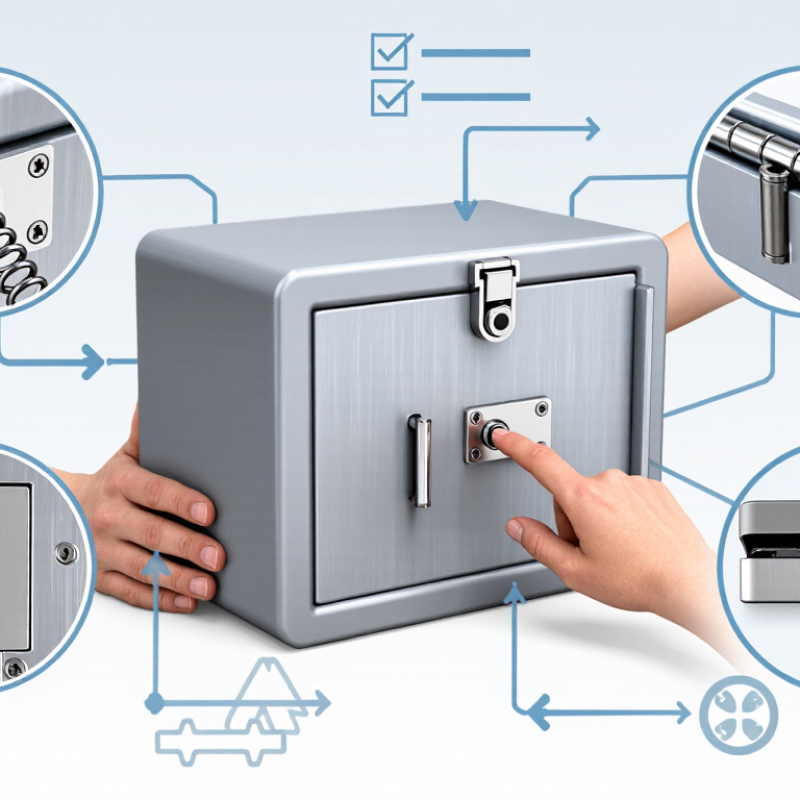
China Best Child Proof Metal Box Manufacturer?

Understanding Child-Resistant Metal Boxes and Their Uses

Child-resistant metal boxes are designed to slow a young child, not to make access impossible. They commonly hold household medicines, small batteries, cleaning supplies, or sharp craft tools. A rigid steel or aluminum shell can resist squeezing and casual prying, while a spring latch or two-step closure adds a barrier. Small details matter. A lid that looks secure may still open if the box tips, wears, or is left unlocked.

The CDC has cited an estimate of about 60,000 U.S. children under five visiting emergency departments each year after getting into medicines. This makes secure storage more than a packaging detail. For special packaging marketed as child-resistant, U.S. testing procedures are described in CPSC regulation 16 CFR 1700.20. That testing does not mean every metal box is certified or suitable for every item. Buyers should check the closure, hinge strength, capacity, and clear instructions, then test access as the product is used. Still, no latch is foolproof. Adults must keep boxes locked and out of reach, and inspect worn parts. A practical weakness remains: people may leave a box open during everyday use.

Key Safety Features and Applicable Compliance Standards

A child-resistant metal box depends on its complete design, not simply its steel or aluminum shell. Look for a closure that requires a deliberate action, such as pressing a recessed tab while sliding the lid. The release should remain manageable for adults, including those with limited hand strength. Smooth edges, a firmly attached hinge, and a finish that resists corrosion also matter. Small details matter. A latch may feel secure on a workbench yet loosen after repeated opening or a short drop. That weakness is easy to miss.

Applicable standards depend on the intended market and product. In the United States, 16 CFR 1700.20 describes testing for special child-resistant packaging. ISO 8317 covers reclosable child-resistant packaging in relevant markets. Requirements can vary, so confirm the current rules with a qualified testing laboratory before making compliance claims. Testing should assess the finished box, closure, and user instructions together—not just the metal component. Child-resistant does not mean child-proof.

Tips: Ask for test reports for the exact box and closure combination. Check that samples open and close consistently after repeated cycles. Review the interior for sharp seams, trapped fingers, or loose parts. Also test adult usability with clear, simple instructions; a secure design can still be frustrating to open. Manufacturers should record design changes and retest when they affect the latch or fit.

How Child-Resistant Metal Boxes Are Designed and Tested

Child-resistant metal boxes rely on more than a strong lid. Designers often use a press-and-slide latch, recessed release points, and tight-fitting seams. These features make opening harder for small hands while remaining usable for adults. Rounded edges and a smooth interior also reduce snagging and injury risks. Small details matter. A latch that feels secure on a sample may loosen after repeated use.

Testing should examine opening force, closure reliability, and wear after repeated cycles. Where applicable, the U.S. Consumer Product Safety Commission’s 16 CFR 1700.20 protocol uses child test panels of 50 children aged 42–51 months and adult panels of 100 participants aged 50–70. These figures describe the test groups, not a guarantee that every child-resistant box performs alike. Test the finished box, not just its latch; metal thickness, coating, and assembly tolerances can change how it opens. Not merely strength.

Tips: Ask for test records, sample size, and the tested box configuration. Check that adults can close the lid correctly, then inspect the latch after repeated opening. A test can miss rough handling at home. That limitation deserves attention.

How to Evaluate Manufacturers in China

China Best Child Proof Metal Box Manufacturer?

How to Evaluate Manufacturers in China

China offers a deep manufacturing base, but a large industry does not guarantee a reliable supplier. The National Bureau of Statistics reported that manufacturing value added accounted for 26.2% of China’s GDP in 2023. Treat that figure as context, not a quality score. Ask each factory for its production address, process flow, inspection records, and recent examples of comparable metal boxes. Verify that quoted samples come from the same facility that will handle your order.

Inspect the details that affect safety and consistency. Check sheet thickness, lid alignment, hinge movement, latch operation, coating coverage, and sharp edges. Request independent test reports for the exact model and configuration, then confirm the laboratory, test date, and report scope. A certificate is a starting point, not proof that every batch performs equally. Have a third party inspect a pre-shipment sample when possible. Small gaps matter.

Tips: Send a written specification with tolerances and packaging requirements. Test samples yourself, including repeated opening and closing. Keep a record of defects; even careful evaluations can miss problems, so review the first production batch before reordering.

China Best Child Proof Metal Box Manufacturer? — How to Evaluate Manufacturers in China
Evaluation Dimension Suggested Weight What to Verify Useful Evidence and Warning Signs
Child-resistant performance 25% Confirm that the complete package design—not just the lid or locking component—has been tested for the intended market and use. Request the test report, tested configuration, laboratory details, and report date. ISO 8317 covers reclosable child-resistant packaging; confirm the applicable requirements with the destination-market regulator or a qualified testing laboratory. Be cautious of unsupported claims such as “childproof.”
Design and closure reliability 15% Assess opening steps, adult usability, reclosure, fit consistency, and resistance to accidental opening after repeated use. Ask for production-representative samples and documented opening, closing, and durability checks. Verify that any change to dimensions, materials, inserts, or closure components is reviewed for its effect on tested performance.
Metal and finish quality 12% Check material specifications, thickness, edge condition, corrosion resistance, coating adhesion, and consistency of printing or decoration. Request material and coating specifications, sample inspection records, and relevant test results. If the box will contact food, medicine, or another regulated product, verify applicable material and migration requirements for the destination market.
Quality management 12% Evaluate incoming-material checks, in-process controls, final inspection, nonconformance handling, and lot traceability. Review a current quality-management certificate where available and verify its scope and issuing body. ISO 9001 certification concerns a quality-management system; it does not by itself certify a product as child-resistant.
Production capability 10% Confirm that the supplier can make the requested size, tooling, closure, finish, and order volume with repeatable quality. Request a process overview, tooling ownership terms, sample timeline, and capacity plan for the proposed order. Check that production samples match the approved drawings and specifications.
Compliance and documentation 10% Establish which laws, packaging standards, labeling rules, and material restrictions apply to the product and destination market. Request a document list matched to the intended use and market. Check report numbers, scope, model identification, and laboratory credentials; do not treat a generic certificate as proof that a specific box design complies.
Lead time and delivery control 8% Review the schedule for sampling, tooling, production, inspection, and shipment, including how delays are communicated. Ask for a written milestone schedule and confirm whether lead time begins after artwork, tooling, or sample approval. Compare the supplier’s stated schedule with your own delivery requirements.
Communication and after-sales support 8% Assess responsiveness, clarity on specifications, change control, complaint handling, and corrective-action follow-up. Use a written specification and approval record. Ask how defects are investigated and how corrective actions are documented; avoid relying only on verbal assurances.
Suggested scoring method: Score each dimension from 1 to 5 using the evidence reviewed, then calculate the weighted result as score ÷ 5 × suggested weight. Weights are an evaluation framework, not an industry benchmark. Confirm regulatory and testing requirements for the specific product and destination market before placing an order.

Materials, Customization, and Quality-Control Considerations

A reliable child-resistant metal box begins with materials suited to its use. Steel can provide a sturdy shell, while aluminum reduces weight and may be easier to carry. The right choice depends on expected handling, storage conditions, and product dimensions. Check the metal thickness, seams, hinge alignment, and coating for scratches or exposed edges. Small details matter. A lid that binds or a sharp corner can make everyday use frustrating.

Customization should improve fit without making the opening mechanism confusing for adults. Manufacturers can adjust dimensions, add fitted inserts, and select finishes that resist wear. Test working prototypes with different users before approving production. A polished sample can still hide a weak hinge or inconsistent latch. That is easy to overlook. Child-resistant does not mean impossible to open, and no single design suits every household.

Quality control should cover incoming materials, assembly, and finished units. Inspect latch engagement, closure gaps, and surface finish across multiple samples, not just one. Repeated opening-and-closing tests can reveal parts that loosen over time. Record results by production batch, and investigate recurring defects rather than relying on visual checks alone. Ask suppliers how they document testing and handle failed units. Clear records make claims easier to verify.