Aluminized Flat Bottom Pouches at Canton Fair 139 Highlights?
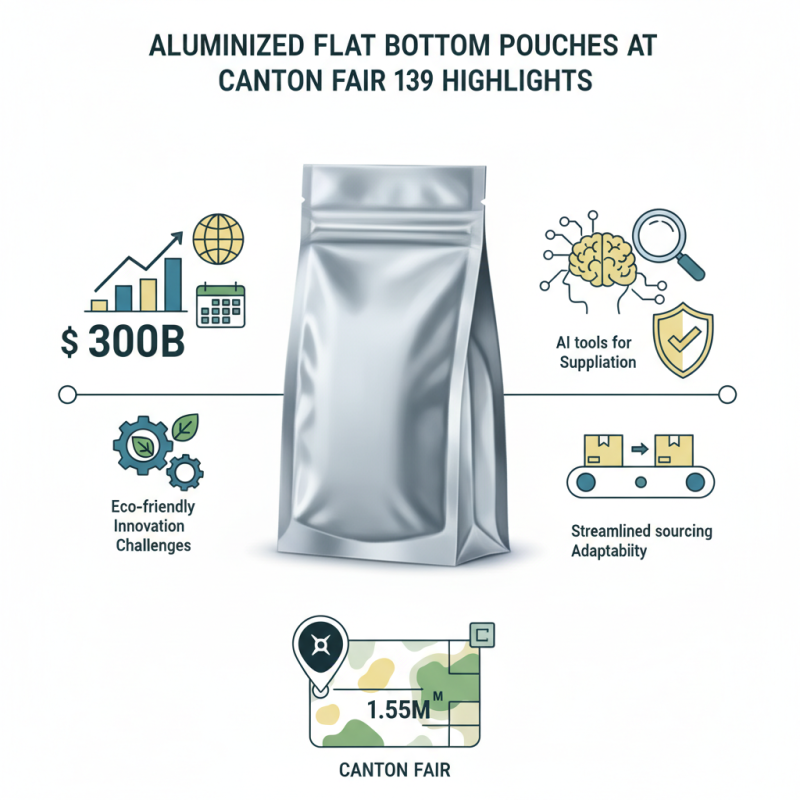
The 139th Canton Fair will showcase advancements in packaging, including Aluminized Flat Bottom Pouches. These pouches are increasingly favored for their durability and moisture barrier properties. Reports indicate that the flexible packaging market is projected to reach USD 300 billion by 2027, reflecting a growing demand for efficient packaging solutions.
Aluminized Flat Bottom Pouches play a crucial role in various industries, especially in food and pharmaceuticals. Their design enhances shelf life and maintains product integrity. However, challenges remain in ensuring eco-friendly materials and production methods. Manufacturers must continually innovate to meet environmental standards and consumer preferences.
As buyers navigate the vast 1.55 million square meters of the fair, AI tools will enhance their experience. These smart solutions will help identify suppliers that hold specific certifications like ISO and CE. Adopting AI technology can streamline sourcing. Yet, it's essential to reflect on how well the industry adapts to these advancements while prioritizing sustainability.
Aluminized Flat Bottom Pouches: Overview of Features and Benefits
Aluminized flat bottom pouches are gaining attention for their unique features. These pouches offer an effective barrier against moisture, light, and oxygen. This helps preserve the product's quality over time. The flat bottom design allows for easy stacking and filling, making them user-friendly. They stand upright, which enhances display opportunities.
Consumers appreciate the versatility of these pouches. They are suitable for various products, including food, cosmetics, and supplements. The shiny exterior gives a modern look while attracting attention on shelves. However, some products may not fit well, requiring adjustments in design or size. This can be a challenge during production.
A notable feature is their eco-friendly options. Many manufacturers are moving towards sustainable materials. However, finding the right balance between durability and environmental impact is crucial. The need for innovation is ongoing. The market is evolving, and manufacturers must adapt or risk becoming obsolete. Aluminized flat bottom pouches represent a dynamic segment in packaging.
Aluminized Flat Bottom Pouches: Overview of Features and Benefits
| Feature | Benefit | Application | Material |
| Aluminized Layer | Excellent barrier properties against moisture and oxygen | Food packaging, electronics | PET/AL/PE |
| Flat Bottom Design | Stability when standing, easy filling | Snacks, coffee, powders | Polypropylene (PP) |
| Customizable Sizes | Flexibility to accommodate various product volumes | Cosmetics, supplements | Nylon/AL/PE |
| Zipper Closure | Resealable for convenience and freshness | Snack foods, dry products | PET/AL/PE |
| High-Quality Printing | Enhanced brand visibility and attractiveness | Retail products | Various film substrates |
Market Trends: Growth of Aluminized Packaging in the Food Industry
Aluminized packaging has seen significant growth in the food industry. Reports indicate a rise of about 7% annually. This growth is driven by the need for longer shelf life and better product protection. Aluminized flat bottom pouches emerge as a popular choice. They are lightweight and highly effective in preserving flavors.
Food safety is paramount. Aluminized packaging offers excellent barriers against moisture and light. According to industry research, nearly 35% of consumers prioritize packaging that maintains freshness. This trend highlights a shift towards sustainable materials as well. Brands are under pressure to balance functionality with eco-friendly solutions.
Yet, challenges lie ahead. Many companies face difficulties in sourcing sustainable aluminum. Additionally, the cost of production can be high. As the market expands, it becomes crucial to rethink strategies. Investing in research for recyclable materials might be necessary. The future of food packaging is interconnected with sustainability efforts and consumer demands.
Comparative Analysis: Aluminized Pouches vs. Traditional Packaging Materials
Aluminized pouches are gaining attention for their efficiency and sustainability. Compared to traditional packaging materials, these bags offer superior barrier properties. Studies show that aluminized pouches can extend shelf life by up to 50%. This is crucial for food preservation. Traditional materials struggle to prevent moisture and oxygen infiltration.
Companies are exploring these new solutions. A recent report indicated that 45% of manufacturers are switching to aluminized pouches. The lightweight design also reduces shipping costs. This packaging is helpful for e-commerce and retail. However, some question its recyclability compared to paper or plastic. It’s an area needing improvement.
**Tips**: When considering packaging options, analyze your product's specific needs. Evaluate the local recycling capabilities. Small changes can lead to significant impacts. Always look to balance sustainability with functionality.
Comparative Analysis: Aluminized Pouches vs. Traditional Packaging Materials
Key Manufacturers and Innovations Showcased at Canton Fair 139
The Canton Fair 139 showcased numerous innovations in packaging, with a focus on aluminized flat bottom pouches. These pouches stand out for their efficiency and versatility. Industry reports indicate that demand for flexible packaging in food and beverage sectors is projected to grow at a CAGR of 4.5% through 2027. This trend highlights the importance of innovation in packaging solutions.
Key manufacturers introduced advanced technologies designed to enhance shelf life and product protection. Many of the showcased pouches feature multi-layer designs that offer superior barrier properties against moisture and oxygen. This ensures that food products maintain freshness for longer periods. However, some presentations raised concerns about the recyclability of these materials. There’s an ongoing need for sustainable solutions that do not compromise on quality.
Additionally, the fair emphasized the importance of customization in packaging. Several manufacturers showcased pouches with unique designs tailored to customer preferences. The challenge remains in balancing customization with production efficiency. As the market evolves, continuous improvement is essential to meet consumer demands and environmental standards. Despite the exciting innovations, discussions around sustainability prompted reflections on current practices in the industry.
Sustainability Aspects: Environmental Impact of Aluminized Pouch Production
Aluminized pouches are increasingly popular due to their excellent barrier properties. However, the environmental impact of their production cannot be ignored. Reports from various industry studies highlight that the production of these pouches often involves materials that require significant energy for processing. Approximately 80% of the energy consumed in pouch production comes from fossil fuels.
The recyclability of aluminized pouches poses another challenge. While some companies adopt sustainable practices, many pouches end up in landfills. An estimated 1.5 million tons of flexible packaging are discarded annually. This results in increased plastic waste and pollution. It raises questions about the industry's commitment to sustainability.
Innovations do exist. The development of bio-based materials is promising. But these alternatives are still in the early stages. The cost and performance of these materials need further evaluation. Companies must prioritize the environmental footprint of their packaging solutions. Addressing these issues is crucial for a sustainable future in flexible packaging.


