Plastic tubes with caps remain a practical choice for cosmetics, personal care, food, and household products. Buyers value their light weight, squeezable walls, and familiar dispensing formats. Yet a tube is only as reliable as its cap, seal, and fit with the filling line. Small details matter.
The OECD’s Global Plastics Outlook reports that packaging generated about 40% of plastic waste in 2019. That figure does not isolate tubes, but it makes material choice and end-of-life planning important buying considerations. Ellen MacArthur, founder of the Ellen MacArthur Foundation, champions circular design; its framework calls on businesses to “design out waste and pollution.” For buyers, that idea can translate into practical questions: Is the tube made with recycled content? Can the cap and tube be separated? Will the package protect the product without unnecessary material?
This 2026 guide compares tube materials, cap styles, decoration options, and wholesale specifications. It also considers minimum order quantities, lead times, and quality checks, including cap torque and leakage testing. Ask suppliers for test methods, not just reassuring claims. A polished sample can hide a loose hinge or uneven seal. One caveat: public market reports rarely break out capped plastic tubes as a separate category, so broad packaging data should not be mistaken for tube-specific demand. Use the comparisons as a starting point, then test samples with your own product and filling process.
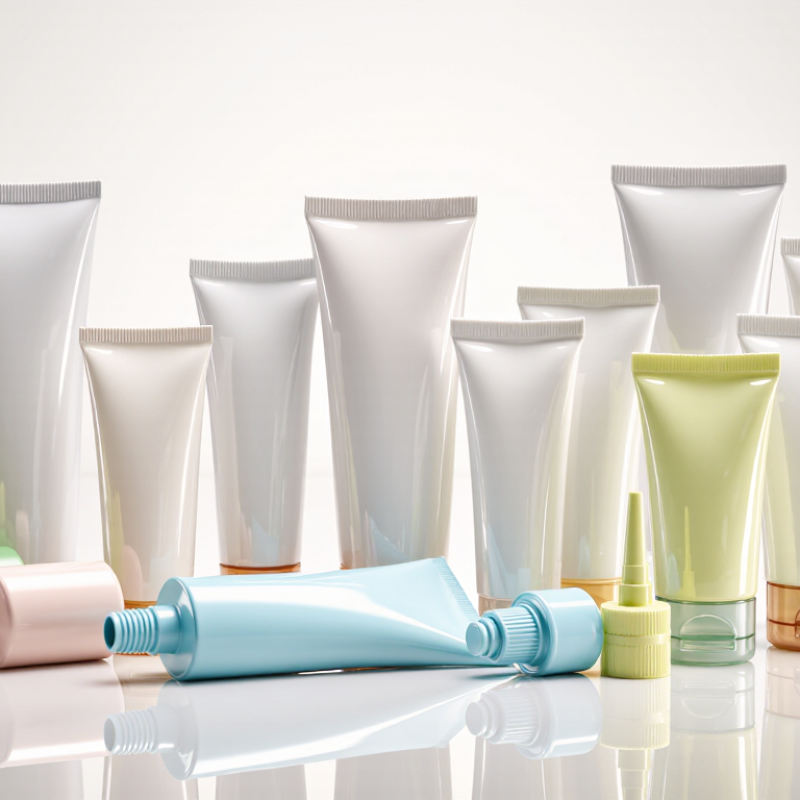
Plastic tubes with caps are cylindrical containers made from flexible or rigid plastic, with an opening sealed by a fitted cap. Depending on wall thickness, a tube may squeeze easily or stay firm enough to protect small parts. Common cap styles include flip-top, screw-on, and snap-fit designs. A cap helps limit spills, dust, and moisture exposure, but it does not make every tube airtight. Check the fit.
These containers hold samples, creams, gels, craft materials, and small hardware such as beads or fasteners. A narrow opening can dispense a controlled amount; a wider one makes filling and cleaning easier. For wholesale orders, match the tube size and cap style to the contents, filling method, and storage conditions. Test a filled sample upright and on its side. Look for seepage, loosening caps, or walls that collapse when squeezed. Confirm the plastic suits the intended contents and temperature range using the supplier’s technical information. Details matter. A cap may feel secure yet be awkward with wet hands, while a sturdy-looking tube may crease after repeated use. Small trials can reveal what a catalog photo cannot.
Plastic tubes are commonly made from polyethylene, polypropylene, or PET, and each behaves differently in use. LDPE and HDPE are flexible choices for squeeze dispensing, while polypropylene usually feels firmer. PET can offer a clear view of the contents, but its suitability depends on the tube design and product. Test material compatibility with the actual formula; appearance alone is not enough. Small detail, big impact.
Round tubes are widely used and easy to fill, while oval or flat-sided shapes can sit neatly in a bag or on a shelf. Tapered ends help direct product flow. Caps may be screw-on, flip-top, or fitted with a narrow nozzle, depending on how customers dispense the contents. Check the cap seal and opening with a filled sample, not just an empty tube.
Capacity options vary by supplier and shape. Small formats may hold around 5 ml, while larger tubes can reach 250 ml or more. A tube’s diameter and length both affect its volume, so two tubes with the same capacity can look quite different. Wholesale buyers should confirm fill volume, usable headspace, and carton dimensions before ordering. This is easy to overlook, and even a good estimate can be wrong.
Plastic tube caps affect dispensing, leakage control, and how easily customers use a product. Flip-top caps open with one hand and suit frequent-use creams or cleansers. Screw caps provide a simple, secure closure for transport, but users must remove and replace them each time. Disc-top caps allow measured pressing, while narrow nozzles guide small amounts onto a fingertip. Small details matter.
For market context, PlasticsEurope’s Plastics – the Facts 2023 report found packaging represented 39.1% of European plastics demand in 2022. That figure highlights packaging’s scale, but it does not identify the best cap for a specific tube. Wholesale buyers should match cap style to product thickness, opening size, and expected use. A nozzle that works well for a thin lotion may clog with a dense cream. It happens.
Tip: Request samples and test them with the actual formula. Check cap fit, opening force, leakage after storage, and repeated opening. Also confirm the tube neck finish and closure material with your supplier; a good-looking cap is not always a good functional match.
| Cap Type | How It Opens and Closes | Dispensing Style | Key Functional Difference | Common Tube Applications | Wholesale Checks |
|---|---|---|---|---|---|
| Screw cap | Twists off and threads back onto the tube neck. | Product is squeezed through the open neck; an optional orifice reducer can control flow. | Simple, reusable closure with a familiar opening action. A secure seal depends on the cap, neck finish, and liner or sealing design. | Hand creams, gels, cleansers, ointments, and other products dispensed through a wider opening. | Confirm thread dimensions, sealing surface, opening size, and whether a reducer or liner is required. |
| Flip-top cap | A hinged lid opens with a thumb press and snaps closed. | Usually dispenses through a small orifice while the cap remains attached to the tube. | Convenient one-handed access and no loose cap to set aside. The hinge and snap fit affect repeated-use performance. | Shampoo, conditioner, body wash, lotion, and other products used with wet hands. | Check hinge durability, closure fit, orifice size, and compatibility with the tube's neck finish. |
| Disc-top cap | A central disc is pressed on one side to open the opposite side; pressing it back closes the cap. | Product is squeezed through a dispensing opening beneath the disc. | Offers convenient access without removing the cap. The dispensing opening is generally fixed, so it may be less suitable for highly precise dosing. | Personal-care lotions, gels, creams, and travel or everyday-use products. | Verify the opening size, disc action, leak performance, and fit with the tube neck. |
| Long nozzle or pointed tip | A small cap is removed or unscrewed from an extended narrow tip. | Directs product through a narrow outlet for more targeted application. | Provides more precise placement than a wide opening. Flow depends on the tip opening, product viscosity, and squeeze force. | Spot treatments, adhesives, craft products, gels, and other products needing targeted dispensing. | Match the tip opening to product viscosity and check for clogging, drying, and secure tip closure. |
| Applicator cap | Typically unscrews from the tube; the assembly may include a shaped applicator surface. | Product is delivered to or through an applicator for localized use. | Combines dispensing with application, which can reduce direct finger contact. Applicator materials and shapes vary by design. | Eye-area cosmetics, spot-care products, and topical formulations designed for targeted application. | Assess applicator material, cleanability, product compatibility, and whether the assembly can be filled and sealed reliably. |
| Child-resistant closure | Uses a specified opening action, commonly push-and-turn or squeeze-and-turn; exact operation depends on the closure design. | Dispensing may be through a standard opening, reducer, or nozzle beneath the closure. | Designed to make access more difficult for children while remaining usable by adults when properly designed and tested. Child resistance is not guaranteed by appearance alone. | Products for which regulations or risk assessments require a child-resistant package. | Confirm applicable market requirements and test the complete package, including the tube, closure, and product. |
| Cap with orifice reducer | A screw cap or other compatible outer cap is removed to access a smaller insert opening. | Dispenses through a reduced aperture that can help limit the amount released per squeeze. | Can improve flow control without using a long nozzle. It does not provide a fixed dose unless the package is specifically designed and validated for that purpose. | Lotions, creams, gels, and products where a smaller outlet is preferred. | Check insert retention, aperture size, product viscosity, and the intended dispensing amount. |
| Overcap with nozzle insert | An outer cap covers a nozzle or dispensing tip and is removed before use. | Product exits through a shaped nozzle once the overcap is removed. | The overcap helps protect the dispensing tip from contact and contamination during storage; the nozzle controls where product is directed. | Targeted-use creams, gels, and specialty formulations requiring a protected dispensing tip. | Confirm that the overcap clears the nozzle, stays securely attached in transit, and fits the tube assembly. |
Buyer note: Cap fit, sealing, and dispensing performance depend on the tube neck finish, cap geometry, product viscosity, and filling process. Request samples and test the complete filled package before placing a bulk order.
Choosing plastic tubes with caps starts with the product, not the catalogue photo. Match the tube material to the formula, then check for changes in odor, color, or texture during a compatibility test. Fit matters. A cap must close securely, open comfortably, and resist leaks during shipment. For thick creams, a wider opening may help; runny products often need tighter dispensing control. Ask suppliers for wall thickness, resin type, neck dimensions, and sample testing results. Small details count.
Packaging choices also affect waste. The OECD’s Global Plastics Outlook reports that packaging generated about 40% of plastic waste in 2019. Eurostat recorded 36.1 kilograms of plastic packaging waste per EU resident in 2022. These figures make lighter designs worth considering, but thinner walls can crease or puncture. There is no perfect tube. Compare protection, material use, and compatibility with local recycling systems; a recyclable label alone does not guarantee recycling. Test filled samples under realistic storage and shipping conditions. I would also question any supplier claim that lacks a test method or clear specification. For wholesale orders, confirm cap fit and print durability across production batches, not just on one sample.
How to read this chart: These are representative density ranges for unfilled resin, measured in g/cm³. Density alone does not determine tube performance: consider product compatibility, squeeze feel, barrier needs, cap fit, and filling requirements when choosing packaging. Actual values vary by resin grade and additives.
For 2026 wholesale orders, compare plastic tubes with caps by delivered cost, not unit price alone. Include tooling, printing, freight, and expected rejects in each quote. Plastics Europe’s Plastics—the Fast Facts 2023 reports global plastics production of 400.3 million tonnes in 2022, showing the scale of the material supply chain. Large volumes do not guarantee stable prices. Small details matter.
Quality checks should match the tube’s actual use. Ask suppliers for wall-thickness tolerances, cap-fit specifications, and leak-test results. Request samples from the production line, then check that caps close evenly and tubes recover after squeezing. A glossy sample can hide inconsistent batches. Test before scaling.
Customization can improve shelf visibility, but special colors, printing, and tube shapes may raise minimum order quantities or extend lead times. OECD’s Global Plastics Outlook (2022) estimates that packaging generated about 40% of global plastic waste in 2019, so buyers can also ask about material weight and recyclability. Confirm whether the cap and tube use compatible materials; “recyclable” claims need local verification. A first order may still reveal flaws, so leave room for one revision.